
Foods That May Be Harming Your Fertility Without You Knowing: Signs to Watch For
Are Your Everyday Food Choices Making Conception Harder?
You are eating your meals, going about your day, and trusting that your body is ready to conceive — yet month after month, it simply is not happening. For many couples in Kadapa and across Andhra Pradesh, the conversation around infertility focuses on hormones, age, and medical conditions — but rarely on what is on the plate.
Here is what surprises most people: the food you eat every single day could be quietly disrupting your hormones, damaging egg quality, lowering sperm count, and blocking ovulation — all without a single obvious symptom.
Infertility affects approximately 14–16% of eligible couples in India, with contributing factors including increased maternal age and lifestyle choices. Among those lifestyle factors, diet is one of the most underestimated yet most actionable. If you have been trying to conceive without success and nobody has asked you about your daily diet, it is time someone did.
The Direct Answer: Yes, Food Can Harm Your Fertility — Here Is How
Research shows that a diet high in trans fats, processed foods, and added sugars can have a negative effect on one's fertility. This is true for both men and women.
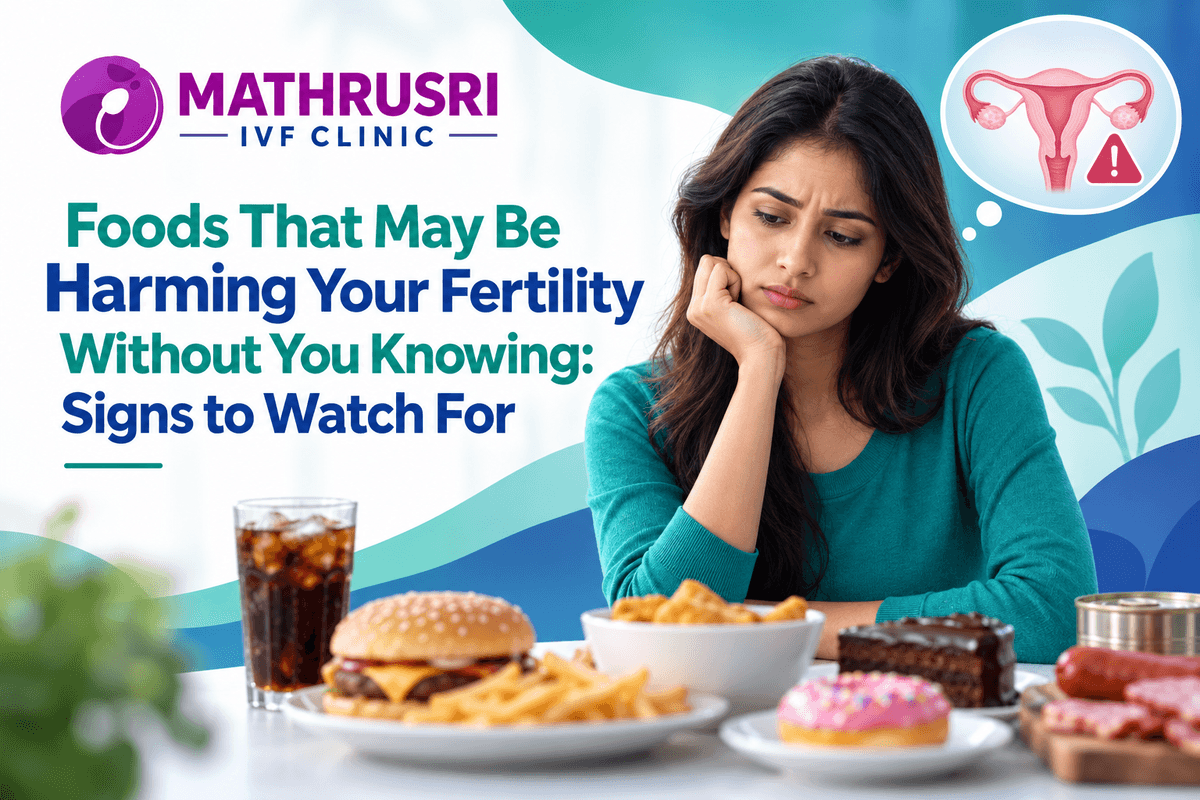
Here are the biggest dietary offenders:
Trans fats (vanaspati, fried street food, packaged snacks): Often found in fried foods, margarine, packaged snacks, and fast food, trans fats can increase the risk of ovulatory infertility by up to 73%.
Refined carbohydrates and sugary foods: White bread, pastries, and sugary treats can cause rapid insulin spikes, disrupting hormone balance and potentially affecting ovulation. Studies show a higher intake of refined carbs is associated with lower fertility in women.
Sugary beverages: Soft drinks and energy drinks are linked to decreased fertility in both men and women. For men, sugary beverages can lower sperm motility.
Processed meats: In a Harvard study, researchers found that frequent consumption of processed meats may harm a man's ability to fertilize an egg. Men who ate fewer than 1.5 servings of processed meats per week had a 28% better chance of achieving pregnancy than men who ate 4.3 servings per week.
Low-fat dairy products: When fat is removed from dairy products, male hormones called androgens are left behind. In women, these androgens can interfere with the menstrual cycle and increase the risk of PCOS and infertility.
Nutrient-poor diets: Deficiencies in essential nutrients such as vitamin B12, iron, zinc, and vitamin D can also have negative effects on fertility.
Warning Signs Your Diet May Be Affecting Your Fertility
Your body often tries to communicate when something is off. The problem is that many couples in Kadapa interpret these signals as "stress" or "tiredness" and never connect them to diet. Watch for these red flags:
In Women:
Irregular menstrual cycles — periods that come at irregular intervals or are very light or very heavy — along with weight management issues, acne-prone skin, excess facial hair, unexplained fatigue, and mood swings are all possible signs of diet-driven hormonal disruption.
Consistently high blood sugar levels from a poor diet can interfere with ovulation and disrupt the delicate hormonal balance that regulates your menstrual cycle — leading to irregular or absent ovulation.
In Men:
Diets low in essential nutrients such as omega-3 fatty acids and antioxidants, and high in saturated and trans fats, correlate with poor semen quality parameters, including reduced sperm count and motility.
High-glycemic diets worsen semen quality, with reduced sperm concentration and motility, as well as hormonal imbalances caused by insulin resistance and oxidative stress.
If you recognise any of these signs in yourself or your partner, do not dismiss them. They are worth investigating — especially with expert fertility guidance.
How Mathrusri IVF Clinic in Kadapa Can Help
At Mathrusri IVF Clinic, Kadapa, we understand that fertility is not just a medical condition — it is deeply personal, and it involves every dimension of your life, including what you eat. Serving couples across Kadapa and Andhra Pradesh, our team takes a comprehensive, root-cause approach to fertility evaluation.
When you visit us, we do not just look at your test reports. We look at you — your lifestyle, your dietary habits, your stress levels, and your full reproductive health picture.
Our evidence-based approach includes:
- Detailed fertility assessments — hormone panels, ovarian reserve testing (AMH), semen analysis, and more
- Personalised nutrition and lifestyle counselling tailored for couples trying to conceive naturally or through assisted reproductive technologies (ART)
- Customised IVF, IUI, and ICSI treatment plans designed around your specific medical and lifestyle profile
- Pre-conception diet optimisation — because what you eat in the months before treatment directly impacts egg quality, sperm health, embryo development, and implantation success
An antioxidant-rich, fertility-supportive diet is commonly recommended alongside treatment — and our specialists at Mathrusri IVF Clinic help you build exactly that plan before and during your fertility journey.
Whether you are just beginning to think about conception or have been trying for some time without success, our doors are open. Kadapa couples no longer need to travel to Hyderabad or Bengaluru for world-class fertility care — it is right here.
Evidence: Why Nutrition Matters More Than You Think
The science is clear and growing stronger every year:
Approximately 15–20% of couples in India — around 30 million — are affected by infertility, with higher rates in urban areas.
Male factors are now responsible for 40–50% of infertility cases, linked to deterioration in sperm quality from environmental toxins and stress — and diet is a major contributing factor.
Diet-related elements play an important role in the regulation of ovulation. Modern dietary patterns that encourage high fat intake exert a particularly negative effect on ovulation, affecting the safety of gametes and the implantation of a healthy embryo.
A diet based on Mediterranean dietary patterns — rich in dietary fibre, omega-3 fatty acids, plant-based protein, and vitamins and minerals — has a positive impact on female fertility.
India has become a prominent international centre for fertility care. For women under 35, the IVF success rate is around 52%, largely determined by age, fertility history, and clinic protocols. Diet and lifestyle optimisation before treatment can meaningfully improve these odds.
At Mathrusri IVF Clinic, our specialists combine the latest reproductive medicine with personalised care — giving couples in Kadapa and Andhra Pradesh the best possible foundation for a successful pregnancy.
Frequently Asked Questions (FAQ)
1. Which Indian foods commonly eaten in Kadapa should be avoided when trying to conceive?
Locally popular items like deep-fried snacks (bajji, bonda), white rice in large portions, sweetened tea multiple times a day, packaged biscuits, and heavily processed ready-to-eat meals are common fertility disruptors. Trans fats found in fried foods and fast food increase inflammation in the body and disrupt hormone production, contributing to ovulatory dysfunction in women and reduced sperm production in men. Swapping these for whole grains, fresh vegetables, nuts, and seeds makes a real difference.
2. How quickly can a bad diet affect fertility?
The effects are not always immediate, but they are real. Diets with a high glycemic index, rich in refined carbohydrates and trans fats, promote insulin spikes, oxidative stress, and hormonal imbalances, impairing ovarian function and egg quality. Since eggs take about 90 days to mature, dietary changes made today can begin improving egg quality within three months — making diet one of the most time-sensitive fertility factors you can actually control.
3. Can diet affect male fertility as much as female fertility?
Absolutely. Studies show that red meat is related to low sperm concentration and total sperm count, and eating processed red meat can also alter sperm motility. Additionally, sperm with the highest trans-fatty acid levels were linked to lower sperm concentrations. Male diet is just as important as female diet — and at Mathrusri IVF Clinic in Kadapa, we evaluate and counsel both partners.
4. Are there fertility-friendly foods I should be eating instead?
Yes. Diets high in unsaturated fats, whole grains, vegetables, and fish have been associated with improved fertility in both women and men. Specifically, diets rich in fibre, omega-3 fatty acids, plant-based proteins, and vitamins and minerals have a positive impact on female fertility. In practical terms for Kadapa households: more greens like palak and methi, whole-grain roti, moong dal, walnuts, fresh fruit, and curds (full-fat) over low-fat dairy options.
5. When should couples in Kadapa see a fertility specialist about diet and infertility?
Do not wait. Fertility is a complex process that relies on hormonal harmony, good-quality eggs and sperm, and a healthy uterine environment. If you and your partner have been trying to conceive for more than 6–12 months without success — or if you notice signs like irregular periods, unexplained weight changes, or abnormal semen test results — consulting a fertility specialist in Kadapa is the right next step. Early evaluation means more options, better outcomes, and a clearer path forward.
Visit Us
Visit Mathrusri IVF Clinic for trusted, compassionate care. We're here for you and your family.
Mathrusri IVF Clinic
Kadapa, Andhra Pradesh
Phone: +91 934 760 7515
Website: www.mathrusriivf.com
Google Maps: https://www.google.com/maps/place/?q=place_id:ChIJq6qq9gtyszsRpyFq50oS8vs
Email: help@mathrusriivf.com