Performed by Dr. Y. Pramoda Reddy at Dr. Y. Pramoda Reddy Fertility Specialist in Kadapa
Laparoscopy in Kadapa is a minimally invasive surgical procedure that allows fertility specialists to diagnose and treat various reproductive disorders through small incisions. This advanced technique uses a thin, lighted camera to examine the pelvic organs, fallopian tubes, ovaries, and uterus, enabling precise treatment of conditions like endometriosis, blocked tubes, and ovarian cysts. At Mathrusri IVF Clinic, Dr. Y. Pramoda performs laparoscopy with state-of-the-art equipment to enhance fertility outcomes.
We believe in honest, upfront disclosure so you can make an informed decision.
A step-by-step look at what happens during this procedure.
General anaesthesia is administered to ensure you remain comfortable and pain-free throughout the procedure. The anaesthesiologist monitors your vital signs continuously.
One or more small incisions (5-10mm) are made near the navel and lower abdomen. These tiny cuts minimize scarring and promote faster healing compared to traditional surgery.
The abdomen is gently inflated with carbon dioxide gas to create space and provide a clear view of the pelvic organs. This allows the surgeon to navigate safely and effectively.
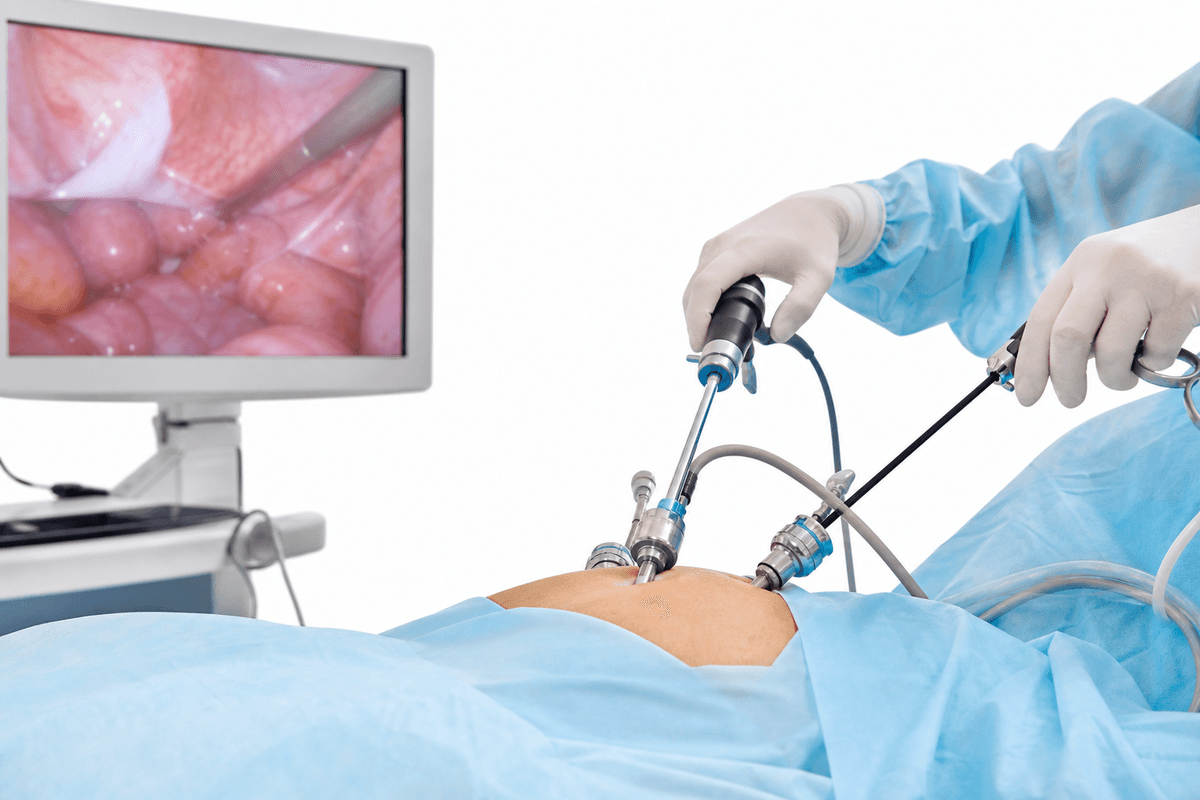
A laparoscope (thin camera) is inserted through the incision, transmitting high-definition images to a monitor. Specialized surgical instruments are introduced through additional ports to perform diagnostic examination and treatment.
The surgeon identifies and treats fertility-related conditions such as removing adhesions, treating endometriosis, or opening blocked tubes. After completion, instruments are removed, gas is released, and incisions are closed with sutures or surgical glue.
A structured, patient-first approach from first consultation to full recovery.
At Mathrusri IVF Clinic, Dr. Y. Pramoda conducts thorough pre-operative assessments including medical history review, ultrasound scans, and blood work to ensure you are an ideal candidate for laparoscopy and to plan the surgical approach.
We utilize state-of-the-art high-definition laparoscopic equipment and specialized fertility microsurgical instruments to ensure precise diagnosis and treatment with minimal tissue trauma and optimal fertility preservation.
Dr. Y. Pramoda personally performs each laparoscopy with meticulous attention to detail, addressing conditions like endometriosis, adhesions, ovarian cysts, and tubal blockages while preserving reproductive potential and minimizing complications.
Our team provides comprehensive recovery guidance, pain management protocols, and scheduled follow-up appointments to monitor healing. We develop individualized fertility treatment plans based on laparoscopic findings to maximize your chances of conception.
What to expect at each stage of your recovery journey.
You may experience mild to moderate abdominal pain, bloating, and shoulder discomfort from residual gas. Pain medication is prescribed, and rest is essential. Most patients can walk within hours and are discharged the same day or next morning.
Pain and discomfort gradually decrease. You can resume light daily activities while avoiding strenuous exercise, heavy lifting, and sexual intercourse. Incision sites begin healing, and any bruising or swelling reduces significantly.
Most patients return to normal activities including work by week two. Full healing of internal tissues occurs by week four, at which point you can resume all activities. Your fertility specialist will discuss findings and next steps for conception based on surgical results.
Laparoscopy provides direct visualization of reproductive organs, enabling definitive diagnosis of endometriosis, pelvic adhesions, tubal blockages, and ovarian abnormalities that may not be detected by ultrasound or other imaging methods.
During the same procedure, surgeons can remove endometriotic lesions, separate adhesions, drain ovarian cysts, and restore tubal patency, significantly improving natural conception rates or enhancing IVF success.
The minimally invasive nature of laparoscopy results in smaller scars, less post-operative pain, reduced risk of complications, and quicker return to daily activities compared to traditional open surgery.
Studies show that laparoscopic treatment of conditions like endometriosis and tubal disease can increase natural pregnancy rates by 30-50% within the first year post-procedure, with enhanced IVF outcomes for those requiring assisted reproduction.
Let's clear up some of the most common myths about laparoscopy.
Get a personalised assessment from an experienced specialist. Understand your options, ask your questions, and decide with confidence.