Treated by Dr. Y. Pramoda Reddy at Dr. Y. Pramoda Reddy Fertility Specialist in Kadapa
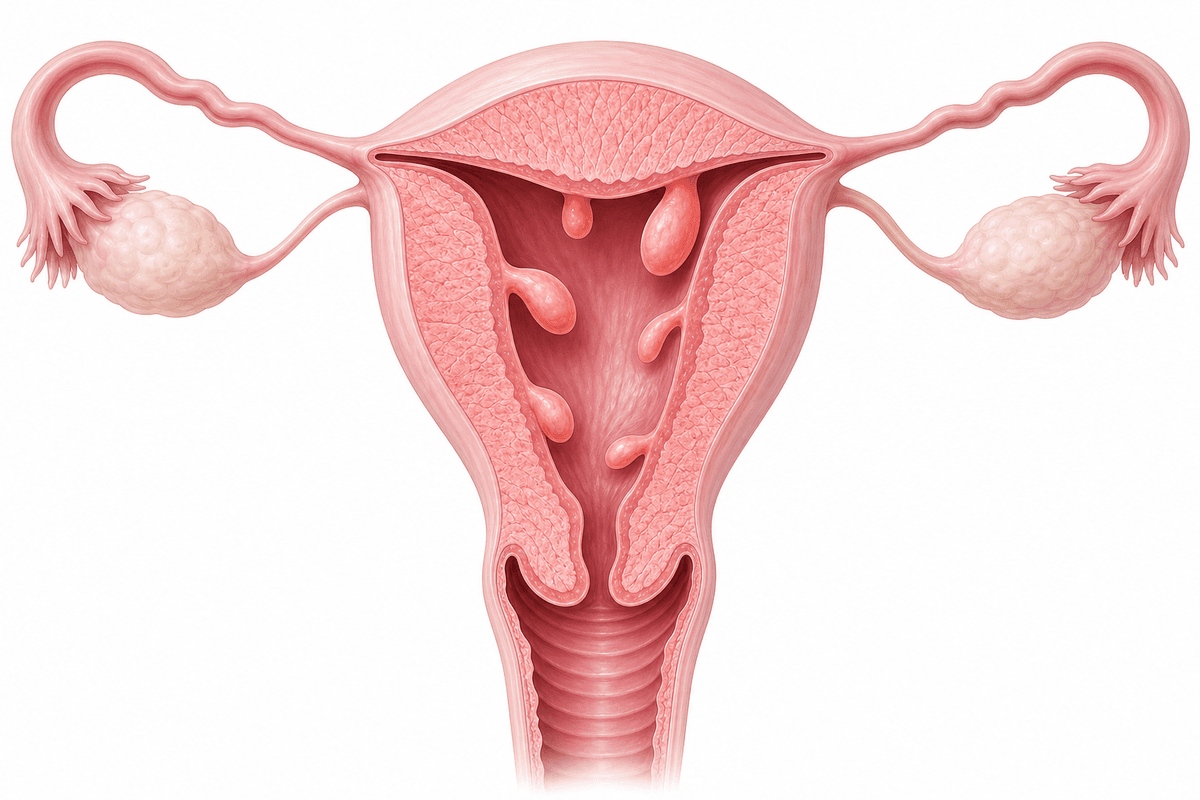
Uterine polyps are soft, benign growths on the inner lining of the uterus (endometrium) that can affect women in Kadapa and worldwide, particularly during reproductive years. These growths can vary in size from a few millimeters to several centimeters and may interfere with fertility or cause abnormal bleeding. At Mathrusri IVF Clinic, Dr. Y. Pramoda specializes in diagnosing and treating uterine polyps to optimize reproductive health and improve pregnancy outcomes for patients seeking fertility care.
These polyps attach to the uterine wall by a thin stalk or pedicle, allowing them to protrude into the uterine cavity. They are more mobile and can sometimes extend through the cervix into the vaginal canal.
These polyps have a broad base of attachment directly to the endometrial lining without a stalk. They are firmly fixed to the uterine wall and typically remain within the uterine cavity.
These polyps develop on the cervical canal rather than within the uterine cavity itself. They may cause irregular bleeding or discharge and are often visible during routine pelvic examination.
Multiple factors can contribute to the development and progression of this condition.
Uterine Polyps develops gradually. Recognising symptoms early gives you more treatment options.
From conservative to surgical — we always start with the least invasive option first.
A structured, patient-first approach from first visit to full recovery.
At Mathrusri IVF Clinic, Dr. Y. Pramoda begins with detailed medical history, pelvic examination, and transvaginal ultrasound to identify polyps. Advanced 3D ultrasound and saline infusion sonohysterography may be used for precise visualization of polyp size, number, and location within the uterine cavity.
Dr. Pramoda develops an individualized treatment plan based on polyp characteristics, fertility goals, and patient preferences. For women actively trying to conceive, prompt polyp removal is recommended to optimize implantation chances. The least invasive effective approach is always prioritized.
Using state-of-the-art hysteroscopic equipment, Dr. Pramoda performs precise polyp removal with minimal trauma to surrounding healthy tissue. The entire uterine cavity is thoroughly examined to ensure no polyps are missed. All removed tissue undergoes histopathological examination to rule out atypical changes.
Following polyp removal, patients receive comprehensive fertility counseling and support. Dr. Pramoda monitors endometrial healing and advises on optimal timing for conception attempts or assisted reproductive procedures. Follow-up ultrasound ensures complete polyp removal and normal cavity restoration.
What to expect at each phase of recovery.
Mild cramping and light spotting are common after hysteroscopic polypectomy. Patients can typically resume normal activities within 24-48 hours. Pain is minimal and managed with over-the-counter medications. Sexual activity and tampon use should be avoided for one week.
The endometrial lining regenerates and heals over the polyp removal site. Light bleeding or brownish discharge may continue for up to two weeks. Most patients return to normal work and routine activities within a few days. Follow any specific restrictions provided by Dr. Pramoda.
The uterine cavity returns to normal architecture, optimizing conditions for embryo implantation. Patients planning pregnancy can typically resume attempts after one normal menstrual cycle. Follow-up ultrasound confirms complete healing and polyp-free cavity. Fertility rates improve significantly after successful polyp removal.
Most patients experience complete resolution of irregular bleeding, spotting, and heavy menstrual flow after polyp removal. Menstrual cycles become more predictable and manageable, significantly improving quality of life and reducing anemia risk.
Polyp removal significantly enhances natural conception rates and improves success of fertility treatments like IVF. Studies show pregnancy rates increase by 40-80% after hysteroscopic polypectomy in women with infertility, as the restored uterine cavity allows proper embryo implantation.
Removing uterine polyps decreases the risk of early pregnancy loss by eliminating mechanical interference with embryo implantation and growth. The normalized uterine environment supports healthy pregnancy development and reduces recurrent miscarriage rates.
Polyp recurrence rates are relatively low after complete hysteroscopic removal, especially when underlying hormonal imbalances are addressed. Regular follow-up monitoring and appropriate hormonal management when indicated help maintain long-term polyp-free status and reproductive health.
Untreated uterine polyps can lead to persistent abnormal bleeding, chronic anemia from heavy menstrual flow, and continued fertility problems including recurrent implantation failure and miscarriage. While most polyps remain benign, there is a small risk of malignant transformation, particularly in postmenopausal women, making timely diagnosis and appropriate management important for reproductive and overall health.
Women in Kadapa should consult Dr. Y. Pramoda at Mathrusri IVF Clinic if experiencing irregular bleeding between periods, unusually heavy menstrual flow, postmenopausal bleeding, or difficulty conceiving after six months of trying. Early evaluation is particularly important for women over 40, those with risk factors like obesity or hypertension, or anyone with persistent abnormal uterine bleeding that affects daily life and quality of living.
Early treatment means more options and better outcomes. Book a consultation to understand your condition and explore the right path forward.