Performed by Dr. Y. Pramoda Reddy at Dr. Y. Pramoda Reddy Fertility Specialist in Kadapa
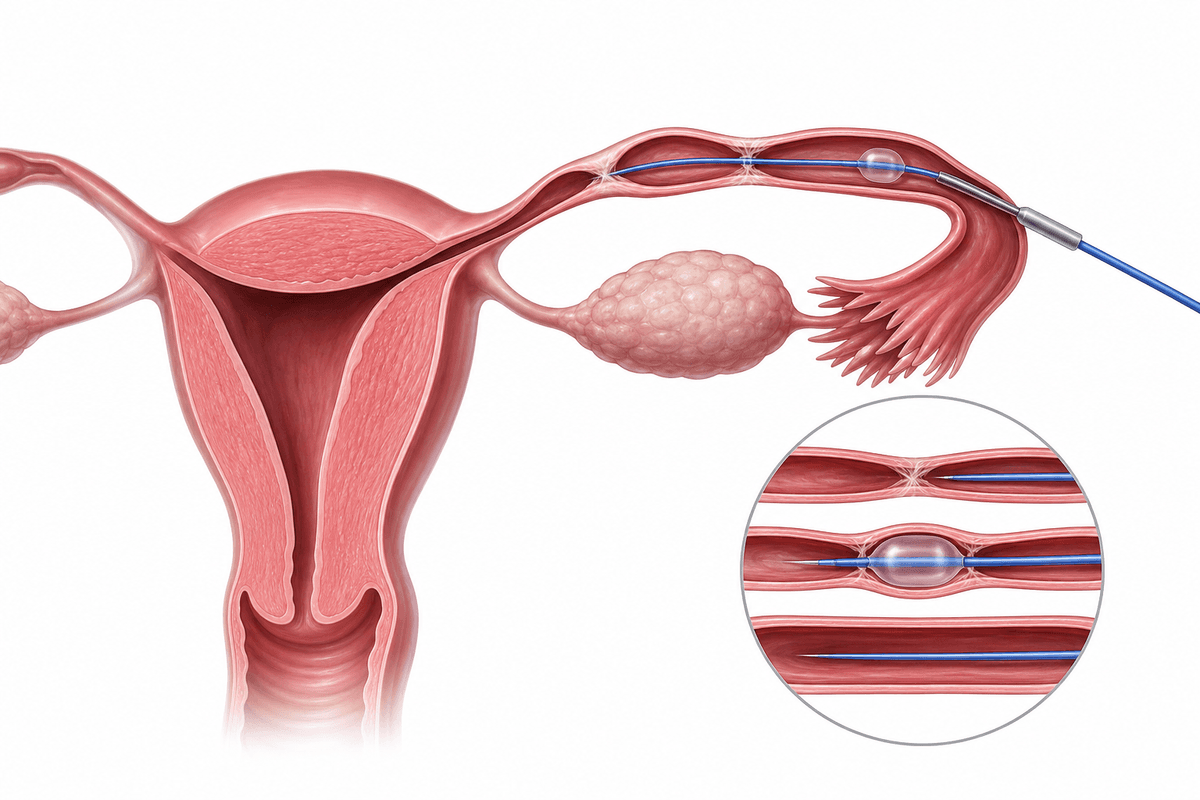
Tubal Recanalization in Kadapa is a minimally invasive procedure that reopens blocked fallopian tubes, restoring natural fertility potential for women experiencing tubal factor infertility. This fluoroscopy-guided catheter-based technique offers a non-surgical alternative to restore tubal patency without the need for extensive surgery. At Mathrusri IVF Clinic, Dr. Y. Pramoda provides expert tubal recanalization with advanced imaging technology and personalized fertility care.
We believe in honest, upfront disclosure so you can make an informed decision.
A step-by-step look at what happens during this procedure.
Hysterosalpingography (HSG) or diagnostic laparoscopy confirms the location and extent of tubal blockage, ensuring the obstruction is proximal and suitable for recanalization.
Under fluoroscopic guidance, a thin catheter is inserted through the cervix into the uterus and advanced toward the blocked fallopian tube opening.
A fine guidewire is carefully threaded through the catheter to gently navigate through the blocked segment of the fallopian tube, creating a pathway.
The catheter is advanced over the guidewire to dilate the previously blocked area, restoring patency and allowing contrast dye to flow through the tube.
Fluoroscopic imaging confirms successful recanalization by demonstrating free flow of contrast through the fallopian tube. The catheter and guidewire are then carefully removed.
A structured, patient-first approach from first consultation to full recovery.
At Mathrusri IVF Clinic, Dr. Y. Pramoda conducts thorough fertility assessments including HSG and ultrasound to accurately identify tubal blockages and determine candidacy for recanalization.
Our clinic utilizes state-of-the-art fluoroscopic imaging equipment to provide real-time visualization during the procedure, ensuring precise catheter placement and optimal success rates.
Dr. Pramoda customizes anesthesia options based on patient comfort, offering local anesthesia with mild sedation to minimize discomfort while maintaining patient safety throughout the procedure.
Following successful recanalization, our team provides comprehensive fertility counseling, timing guidance for conception attempts, and follow-up monitoring to maximize pregnancy chances.
What to expect at each stage of your recovery journey.
Patients rest for 1-2 hours post-procedure in the recovery area for observation. Mild cramping and spotting are normal. Most patients are discharged the same day with oral pain medication and activity restrictions.
Over the next 2-3 days, patients should avoid strenuous activities, heavy lifting, and sexual intercourse. Light spotting may continue. Most women return to normal daily activities within 48-72 hours with minimal discomfort.
By 1-2 weeks post-procedure, complete healing occurs and sexual activity can resume. Patients are advised on optimal timing for conception attempts based on their menstrual cycle and ovulation patterns during the following months.
Technical success rates range from 70-80%, meaning the blocked fallopian tube is successfully reopened and allows passage of contrast dye on post-procedure imaging, restoring the anatomical pathway for conception.
Approximately 30-60% of women who undergo successful tubal recanalization achieve natural pregnancy within 12 months, with highest conception rates occurring in the first 6 months following the procedure.
Tubal recanalization provides a minimally invasive alternative to laparoscopic tubal surgery, reducing surgical risks, recovery time, and costs while preserving reproductive anatomy and future fertility options.
For women with isolated proximal tubal blockages, successful recanalization may eliminate or delay the need for in vitro fertilization, allowing for natural conception attempts and reducing fertility treatment expenses.
Let's clear up some of the most common myths about tubal recanalization.
Get a personalised assessment from an experienced specialist. Understand your options, ask your questions, and decide with confidence.