Treated by Dr. Y. Pramoda Reddy at Dr. Y. Pramoda Reddy Fertility Specialist in Kadapa
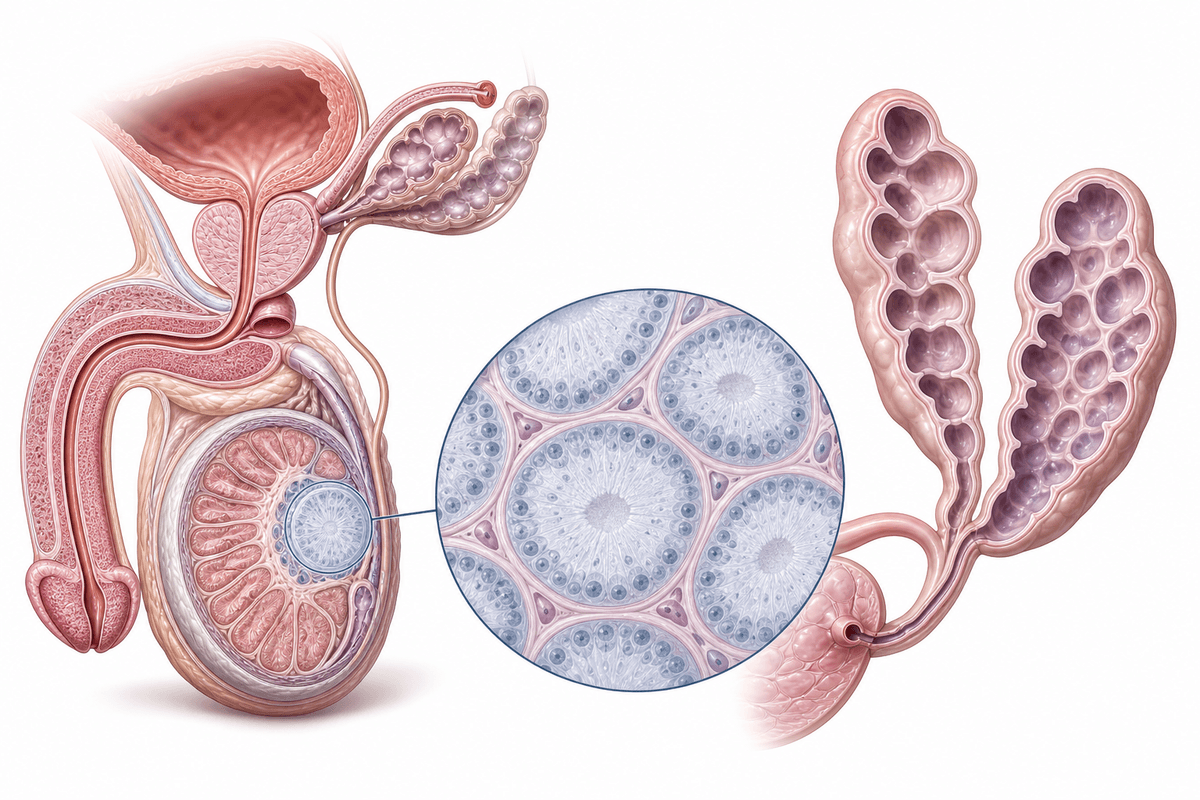
Azoospermia is a male infertility condition characterized by the complete absence of sperm in the ejaculate, affecting men in Kadapa and worldwide. This condition can result from blockages in the reproductive tract or impaired sperm production in the testicles. At Mathrusri IVF Clinic, Dr. Y. Pramoda provides comprehensive evaluation and advanced treatment options including surgical sperm retrieval techniques to help couples achieve their dream of parenthood.
Sperm production is normal but blocked ducts prevent sperm from reaching the ejaculate. Blockages may occur in the vas deferens, epididymis, or ejaculatory ducts due to infections, injuries, or congenital absence.
The testicles produce little to no sperm due to hormonal imbalances, genetic factors, or testicular failure. This is the more challenging form to treat and requires specialized fertility interventions.
Caused by hormonal deficiencies that affect sperm production signals from the brain to the testicles. Conditions like hypogonadotropic hypogonadism can often be corrected with hormone replacement therapy.
Multiple factors can contribute to the development and progression of this condition.
Azoospermia develops gradually. Recognising symptoms early gives you more treatment options.
From conservative to surgical — we always start with the least invasive option first.
A structured, patient-first approach from first visit to full recovery.
Dr. Y. Pramoda conducts detailed semen analysis, hormonal profiling (FSH, LH, testosterone), scrotal ultrasound, and genetic testing to determine the type and cause of azoospermia, ensuring accurate diagnosis and personalized treatment planning.
Our team provides detailed counseling about treatment options based on diagnostic findings, explaining success rates, procedures, and costs. We discuss hormonal therapy, surgical correction, or sperm retrieval with IVF-ICSI based on individual circumstances.
Mathrusri IVF Clinic offers state-of-the-art surgical sperm retrieval techniques including TESA, PESA, and micro-TESE performed by experienced specialists. Retrieved sperm is immediately processed by our embryology team for ICSI or cryopreservation for future use.
We coordinate the complete IVF-ICSI cycle with precise timing between sperm retrieval and egg collection. Our fertility specialists provide continuous monitoring, embryo quality assessment, and post-transfer care to maximize pregnancy success rates and support couples throughout their journey.
What to expect at each phase of recovery.
After sperm retrieval procedures, patients experience mild scrotal discomfort managed with pain medication and ice packs. Rest is recommended for 24-48 hours with minimal physical activity. Most men resume light activities within 2-3 days.
Scrotal swelling and bruising gradually subside within one week. Patients avoid heavy lifting, strenuous exercise, and sexual activity for 1-2 weeks. Follow-up appointments monitor healing and discuss ICSI outcomes or plan for subsequent cycles.
For hormonal therapy or varicocele repair cases, semen analysis is repeated at 3 and 6 months to assess improvement in sperm production. Couples receive ongoing fertility counseling and additional treatment cycles are planned if needed to achieve pregnancy.
Obstructive azoospermia cases have 90-100% sperm retrieval success rates, while non-obstructive cases achieve 40-60% success with micro-TESE. Retrieved sperm quality determines ICSI fertilization potential and pregnancy outcomes.
IVF-ICSI cycles using surgically retrieved sperm result in pregnancy rates of 40-50% per cycle, comparable to standard IVF success rates. Multiple cycles may be needed, and cryopreserved sperm enables additional attempts without repeat surgery.
Men with hormonal causes of azoospermia can achieve natural sperm production in 60-70% of cases through targeted hormone therapy. This may enable natural conception or improve outcomes for assisted reproductive techniques.
With advanced treatment options including sperm retrieval and ICSI, over 60% of couples with male factor azoospermia successfully achieve biological parenthood. Multiple treatment cycles and comprehensive care optimize cumulative success rates.
Untreated azoospermia results in permanent male infertility and inability to conceive biological children naturally. The psychological impact on couples can be significant, affecting relationships and mental health. Progressive testicular conditions may worsen over time, and delayed treatment reduces the effectiveness of hormonal therapies and sperm retrieval success rates, limiting future family-building options.
Couples should consult Dr. Y. Pramoda at Mathrusri IVF Clinic if they have been unable to conceive after 12 months of regular unprotected intercourse, or 6 months if the female partner is over 35 years. Men with known risk factors such as undescended testicles, previous groin surgeries, chemotherapy exposure, or family history of infertility should seek evaluation earlier. Immediate consultation is recommended if semen analysis reveals complete absence of sperm or if there are signs of hormonal imbalance.
Early treatment means more options and better outcomes. Book a consultation to understand your condition and explore the right path forward.