Treated by Dr. Y. Pramoda Reddy at Dr. Y. Pramoda Reddy Fertility Specialist in Kadapa
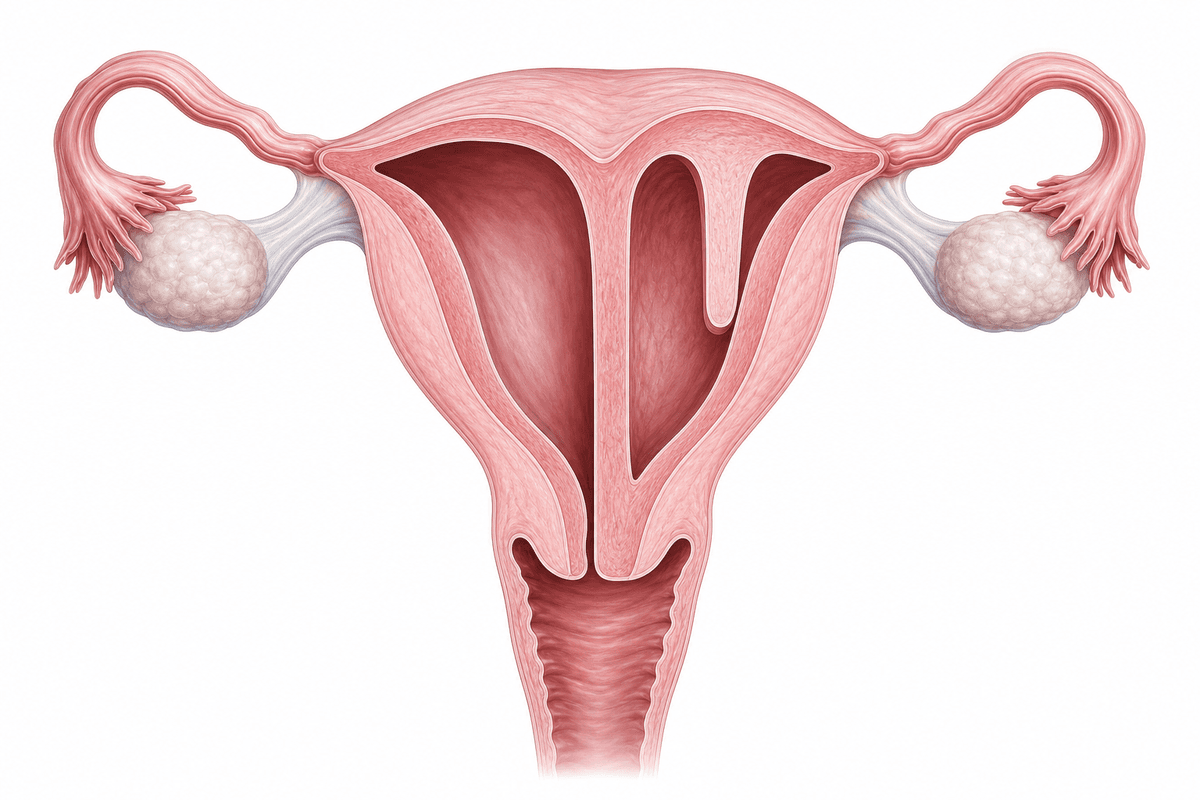
Uterine septum and congenital uterine anomalies in Kadapa refer to structural abnormalities of the uterus present from birth, where the uterine cavity is partially or completely divided by a septum or has an abnormal shape. These conditions can significantly impact fertility, increase miscarriage risk, and cause pregnancy complications. Dr. Y. Pramoda at Mathrusri IVF Clinic provides comprehensive evaluation and advanced treatment options for women with congenital uterine anomalies.
A fibrous or muscular wall that partially or completely divides the uterine cavity from the fundus downward, representing the most common congenital uterine anomaly associated with recurrent pregnancy loss and preterm birth.
A heart-shaped uterus with two separate uterine horns that partially fuse, creating a deep indentation at the fundus and potentially reducing uterine capacity, leading to pregnancy complications and malpresentation.
A banana-shaped uterus formed when only one Müllerian duct develops properly, resulting in a smaller uterine cavity with approximately half the normal size and often associated with renal anomalies and ectopic pregnancy risk.
Multiple factors can contribute to the development and progression of this condition.
Uterine Septum & Congenital Uterine Anomalies develops gradually. Recognising symptoms early gives you more treatment options.
From conservative to surgical — we always start with the least invasive option first.
A structured, patient-first approach from first visit to full recovery.
At Mathrusri IVF Clinic, Dr. Y. Pramoda begins with detailed 3D transvaginal ultrasound, hysterosalpingography, and diagnostic hysteroscopy to accurately classify the uterine anomaly type and assess its impact on fertility and pregnancy potential.
Based on the specific anomaly type, reproductive history, and fertility goals, our team develops an individualized treatment plan that may include surgical correction, fertility optimization, or a combination of approaches tailored to maximize pregnancy success.
Dr. Y. Pramoda performs hysteroscopic septum resection or laparoscopic metroplasty using state-of-the-art equipment and minimally invasive techniques, ensuring precise correction with minimal recovery time and optimal reproductive outcomes for our patients.
Following surgical correction, Mathrusri IVF Clinic provides comprehensive fertility treatment including ovulation monitoring, IUI, or IVF as needed, along with specialized high-risk pregnancy management to ensure the best possible outcomes for mother and baby.
What to expect at each phase of recovery.
Following hysteroscopic septum resection, patients typically experience mild cramping and light spotting for 3-5 days, with most returning to normal activities within 1-2 days. Pain management with over-the-counter medications and rest is recommended during this initial phase.
A 6-8 week healing period is required before attempting conception, during which estrogen therapy may be prescribed to promote endometrial healing. Follow-up hysteroscopy or 3D ultrasound at 2-3 months confirms complete healing and proper uterine cavity formation.
After confirmation of adequate healing, patients can resume trying to conceive naturally or proceed with assisted reproductive treatments. Pregnancy rates significantly improve after surgical correction, with most successful conceptions occurring within 6-12 months of surgery.
Following hysteroscopic septum resection, pregnancy rates increase to 60-70% and live birth rates improve from 30-40% pre-surgery to 70-85% post-surgery, with significant reduction in first-trimester miscarriage risk.
Surgical correction of uterine septum decreases recurrent pregnancy loss rates from 60-90% down to 10-20%, allowing women with history of multiple miscarriages to achieve successful full-term pregnancies.
Treatment of congenital uterine anomalies reduces preterm birth rates and improves fetal growth parameters, though women with corrected anomalies still require close obstetric monitoring throughout pregnancy for optimal outcomes.
For women undergoing IVF after uterine anomaly correction, implantation rates improve by 15-25% compared to uncorrected anomalies, with better embryo placement options and endometrial receptivity in the normalized uterine cavity.
Untreated uterine septum and congenital uterine anomalies can lead to recurrent pregnancy losses, with miscarriage rates as high as 60-90% in women with complete septum. Women may experience repeated emotional trauma from multiple failed pregnancies, increased risk of preterm labor, fetal malpresentation, and cesarean delivery. Without intervention, many women face years of unsuccessful conception attempts and may never achieve a successful full-term pregnancy despite fertility.
Women should seek evaluation from Dr. Y. Pramoda at Mathrusri IVF Clinic if they experience two or more consecutive miscarriages, have difficulty conceiving after 6 months of trying (especially if over 35), or have a family history of uterine anomalies. Immediate consultation is recommended if previous imaging has identified a uterine abnormality or if there is concern about abnormal uterine bleeding patterns. Early diagnosis and treatment significantly improve reproductive outcomes and reduce the emotional burden of repeated pregnancy losses.
Early treatment means more options and better outcomes. Book a consultation to understand your condition and explore the right path forward.